
Affiliate Disclosure: Some of the links in this post are affiliate links. This means we may earn a small commission if you make a purchase through these links—at no extra cost to you. We only recommend products and tools that we genuinely believe will help you with your woodworking projects.
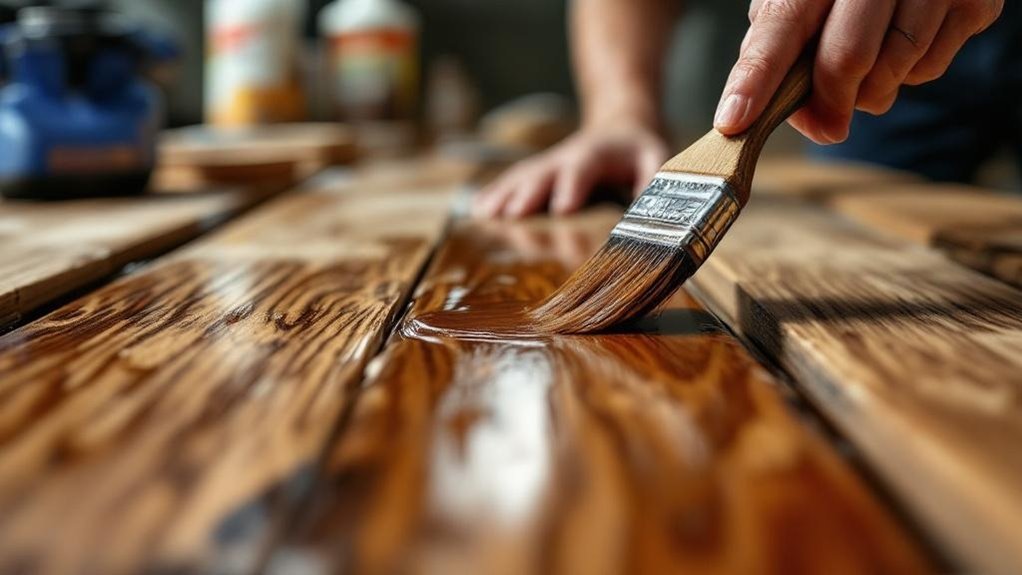
You’ll transform raw wood into a refined heirloom by mastering advanced finishing. First, meticulously prepare the surface with grain-aware sanding to guarantee a flawless foundation. Then, choose a finish like durable lacquer, warm shellac, or tactile hardwax oil, applying it with precise techniques such as French polishing. Layering materials creates depth and protects the wood’s character while distressing adds unique history. Understanding these methods elevates your craft, revealing secrets for truly professional results.
- Key Takeaways
- What Defines an “Advanced” Wood Finish?
- Choose Your Advanced Finish: Lacquer, Shellac, or Hardwax Oil?
- Prepare the Wood Surface for a Flawless Advanced Finish
- Apply a Mirror-Like Gloss Finish With French Polishing
- Master Burnishing for a Durable, Wax-Free Shine
- Create Perfect Custom Stains and Blended Colors
- Spray Finishes Like a Pro in a Booth or Shop
- Apply Advanced Finishes to Large-Scale Millwork
- Add Character With Distressing and Antiquing Techniques
- Repair Deep Scratches and Dents in Finished Surfaces
- Troubleshoot Common Advanced Finishing Problems
- Maintain and Protect Your Advanced Wood Finishes
- Frequently Asked Questions
- Conclusion
Key Takeaways
- Master complex techniques like French polishing to build deep, reflective layers of finish.
- Choose advanced finishes like lacquer or hardwax oil based on desired durability and aesthetic.
- Prepare the wood meticulously with grain-aware sanding and systematic grit progression.
- Apply finishes using precise methods like burnishing or spray techniques for flawless results.
- Utilize custom distressing and antiquing techniques to create unique, aged character.
What Defines an “Advanced” Wood Finish?
What truly defines an “advanced” wood finish? It’s not just protection; it’s a deliberate, skilled craft that elevates the wood’s inherent character. You achieve this by mastering specific application techniques like French polishing, where your pad work builds a flawless, deep gloss through sheer repetition.
An advanced wood finish is a skilled craft, elevating inherent character through deliberate techniques like French polishing.
These advanced finishes rely heavily on layering materials—think multiple controlled coats of shellac or complex stains—to create depth and visual intrigue a single coat never could.
Your approach is never one-size-fits-all; you must tailor every step to the wood species at hand, factoring in its unique grain and absorption to guarantee the finish enhances rather than obscures.
It’s a process demanding precision, patience, and a deep understanding of materials.
Choose Your Advanced Finish: Lacquer, Shellac, or Hardwax Oil?
So how do you select an advanced finish from these three? For maximum durability and a high-gloss film, you choose lacquer. It dries fast, allowing quick recoats, but demands proper ventilation.
If you prioritize a natural, easily repairable protective finish that enhances depth, shellac is your historical choice; it dries quickly and works beautifully as a sealer.
For a natural feel that highlights wood texture, select hardwax oil. It penetrates deeply and leaves a breathable, tactile surface.
Your decision hinges on the project’s needs: use lacquer for high-wear resilience, shellac for antique warmth and simplicity, or hardwax oil for a durable, low-luster look that celebrates the wood’s character.
Prepare the Wood Surface for a Flawless Advanced Finish
Your flawless finish starts with meticulous surface inspection, checking under angled light to reveal every scratch or uneven spot.
You’ll sand exclusively along the wood grain, moving methodically from coarse to fine grits to create a perfectly uniform surface.
This grain-aware sanding method guarantees your advanced finish adheres correctly and showcases the wood’s natural character without any imperfections.
Surface Imperfection Inspection
Kick off your advanced finishing by diving into a meticulous surface imperfection inspection under varied light angles. Position a bright light source across the grain, raking it low to expose scratches, dents, and inconsistencies that flat lighting conceals.
Your hand’s a critical tool; run it lightly over every inch to feel for subtle ridges or depressions your eyes might miss. You’ll then address these imperfections with progressive sanding, using a fine block or sponge to blend them seamlessly into the surrounding wood.
Grain-Aware Sanding Methods
With the surface inspected and corrected, you’re ready to prepare the wood itself through grain-aware sanding. This meticulous process guarantees a flawless finish by aligning your technique with the wood’s natural grain patterns. Your choice of sandpaper and progression through grits is critical.
- Always follow the grain: Sand exclusively in the direction of the wood’s grain patterns with each grit to avoid irreversible cross-grain scratches that will telegraph through your final coats.
- Progress systematically: Begin with a coarse-grit sandpaper to remove material, then methodically work through finer grits, like 120, 180, and 220, to polish the surface.
- Use a supporting tool: Employ a firm sanding block or a random orbital sander to maintain perfectly even pressure and prevent dips or uneven surfaces.
- Inspect and clean relentlessly: After each grit, wipe the surface with a tack cloth and examine it under raking light to find any remaining imperfections before proceeding.
Apply a Mirror-Like Gloss Finish With French Polishing
Although it’s a laborious process, French polishing rewards you with a finish that’s exceptionally deep and reflective. This classic technique stands apart among wood finishing techniques for enhancing the wood’s natural beauty.
You apply numerous thin layers of shellac using a specialized pad, a meticulous application method that blends the finish with a dash of oil and friction. Each stroke relies on this blend to deposit shellac while avoiding any visible marks, building profound depth.
You’ll perform dozens of these applications in a strictly dust-free environment to prevent imperfections. The cumulative effort creates a glass-like sheen that elevates high-end projects, making French polishing a premier choice for achieving a luxurious, mirror-like gloss.
Master Burnishing for a Durable, Wax-Free Shine
- Use a dedicated burnisher, polished bone, or even a smooth, hardened steel rod, applying firm, consistent pressure along the grain.
- Confirm your wood is perfectly smooth and has a fully cured penetrating finish, like oil, for the tool to glide effectively.
- The friction generates heat, which further compacts the fibers, creating a denser, more resilient surface that repels moisture and minor abrasions.
- Integrate burnishing as a final step in your finishing schedule to lock in beauty and build a long-lasting, low-maintenance sheen.
Create Perfect Custom Stains and Blended Colors
Craft custom stains to reveal a spectrum of colors and enhance the wood’s natural grain for truly unique projects. The best custom staining doesn’t mask; it works to augment the wood’s inherent character.
This guide covers the essentials, starting with your wood’s hue and absorption rate to predict the outcome. Always test your blended formula on scrap.
Master the fundamentals: analyze your wood’s natural color and absorption to anticipate results. Always test your stain on scrap wood first.
Mix oil-based and gel stains for complex, harmonious colors. Apply these mixtures with a cloth or brush using methodical, overlapping strokes to lay down uniform coats.
You must wipe off excess stain promptly to prevent blotching and guarantee consistent depth. This precise process yields a unified, professional finish where color and grain exist in perfect balance.
Spray Finishes Like a Pro in a Booth or Shop
* Dial in Your Equipment: Set your spray gun to 25-30 PSI and select the correct fluid tip.
Always test your pattern and material flow on scrap wood first.
* Execute Consistent Passes: Use a smooth, overlapping motion, moving parallel to the surface.
Start your stroke before the piece and continue beyond it.
- Prepare Between Coats: Once the first coat finishes dry, lightly sand with 320-400 grit sandpaper to level the surface and guarantee perfect adhesion for the next layer.
- Control Your Environment: Maintain clean, filtered airflow to minimize dust nibs and allow coatings to cure properly without contamination.
Apply Advanced Finishes to Large-Scale Millwork
Begin by tackling the colossal surface with meticulous preparation, which is non-negotiable for achieving a flawless result on large-scale millwork. You must employ systematic sanding techniques, progressing through grits, to create a perfectly smooth substrate. Remove all dust before applying your chosen advanced finishes. For expansive surfaces, you’ll find specialized spray equipment indispensable for achieving a uniform film without brush marks. Build your finish in multiple, thin layers, sanding lightly between each coat to guarantee perfect adhesion and a deep, flawless surface.
| Finish Type | Primary Application Method | Key Benefit for Millwork |
|---|---|---|
| Catalyzed Lacquer | HVLP Spray | Superior durability and resistance |
| Hardwax Oil | Pad or Rag | Enhances natural grain with easy upkeep |
| Water-based Polyurethane | Airless Spray | Low odor with strong protective qualities |
This layered approach maximizes both protection and beauty, allowing the wood’s character to shine through the durable film.
Add Character With Distressing and Antiquing Techniques
- Employ tools like a hammer’s claw, chains, or coarse sandpaper to create dings and scratches that mimic decades of use.
- Apply a dark, oil-based glaze or pigmented wax after distressing; it will settle into the fresh crevices, emphasizing texture.
- Use a rag to immediately wipe the antiquing medium from high surfaces, leaving it only in recesses for a realistic shadow effect.
- Seal the entire piece with a clear topcoat to protect the newly created history and unify the finish.
Repair Deep Scratches and Dents in Finished Surfaces
To fix deep scratches or dents, start by cleaning the damaged area and sanding gently with a fine-grit sandpaper, always following the wood grain.
For the actual repair, press a color-matched wood filler into the void with a putty knife, overfilling it slightly. Scrape away all excess immediately for a flush surface once it cures.
After the filler hardens, sand it perfectly level with the surrounding wood.
You must now apply a matching finish. Carefully feather your stain, shellac, or lacquer over the repaired spot, blending it into the original refinished surfaces.
For minor luster differences, a final light buffing with superfine abrasive pad often unifies the sheen, making the repair deep scratches and dents virtually disappear.
Troubleshoot Common Advanced Finishing Problems
- To eliminate bubbling, your primary focus must be flawless surface prep; sand thoroughly and remove all dust before applying any wood finishes.
- Prevent streaking by applying thin, even coats with consistent technique, avoiding pooled excess.
- Correct a cloudy finish by checking humidity and considering a spray gun for a uniform laydown.
- If adhesion fails, strictly follow manufacturer prep instructions and test for compatibility on your substrate.
Maintain and Protect Your Advanced Wood Finishes
You’ll need to establish effective periodic cleaning methods to remove contaminants before they etch the film.
Selecting sustainable treatment options preserves your finish’s integrity without harsh chemicals.
When wear occurs, you must apply precise damage repair strategies to restore the surface without a complete refinish.
Periodic Cleaning Methods
- Dust Religiously: Use a microfiber duster to remove abrasive particles that can etch fine finishes.
- Clean Correctly: Apply a pH-neutral wood cleaner with a soft cloth to lift grime without harming the protective layer.
- Tackle Spills Gently: Dampen a cloth with a mild soap solution, wring it thoroughly, wipe, and dry instantly to protect the wood from moisture.
- Polish Strategically: Apply a compatible wood polish every few months to replenish luster;
remember, quality oil finishes provide nourishment and may require specific enhancers.
Sustainable Treatment Options
While maintaining an advanced wood finish, you can also protect the environment by choosing sustainable treatment options that enhance durability and beauty. You should prioritize environmentally friendly products like natural oil finishes, such as tung or linseed oil.
These penetrating oils enrich the wood’s grain and provide a durable, protective layer, enhancing both beauty and durability. Complement these oils with regular application of a biodegradable wax for added moisture resistance.
For refinishing, select water-based products over solvent-based alternatives to safeguard indoor air quality. Integrate these sustainable treatment options into a maintenance plan that includes seasonal inspections and touch-ups with non-toxic cleaners to guarantee lasting protection and appeal.
Damage Repair Strategies
- For meticulous scratch repair, you’ll fine-sand the area, apply a matching filler, and carefully refinish to blend with the surrounding wood grain.
- Perform dent removal by applying controlled moisture and heat to swell the compressed wood fibers back to level.
- Conduct regular inspections under good light to identify early signs of wear or impact.
- Complete proactive touch-ups with compatible products to preserve the film integrity and prevent future damage.
Frequently Asked Questions
What Safety Gear Is Required for Advanced Finishes?
Always wear an organic vapor respirator with correct cartridges. Use nitrile gloves, safety goggles, and guarantee good ventilation. Some catalyzed finishes require a full face respirator—check the product’s SDS for specific, mandated protection.
How Do Environmental Conditions Affect the Finishing Process?
Your weather and your finish set together. Low humidity or cold temperatures slow curing drastically, making polyurethane gummy. High humidity blushes lacquer, trapping moisture. You always monitor conditions or you risk flaws that can’t be undone.
What Is the Typical Cost Difference Versus Basic Finishes?
Expect a higher cost; you’ll often pay at least 50-100% more for advanced finishes versus basic ones. The premium materials and considerably greater labor time for application and curing drive this difference.
Can I Combine Multiple Advanced Finishing Techniques?
Yes, you can combine them, but plan it like a medieval siege. You’ll layer techniques, ensuring each coat is fully cured before applying the next, or you’ll risk adhesion failures and a muddy final appearance.
Which Finishes Are Food-Safe for Kitchenware or Tables?
For kitchenware, you’ll use pure, fully cured tung or linseed oil, or food-grade mineral oil. For tables, use hard, cured film finishes like shellac or polyurethane; you shouldn’t apply these to direct-food surfaces.
Conclusion
You’ve mastered these techniques, giving your project its final skin. Your patience has paid off, and that finish now stands as a tribute to your skill. To keep it looking sharp for years, regular care is your best bet. Remember, a little elbow grease goes a long way in protecting that hard-earned, brilliant surface.